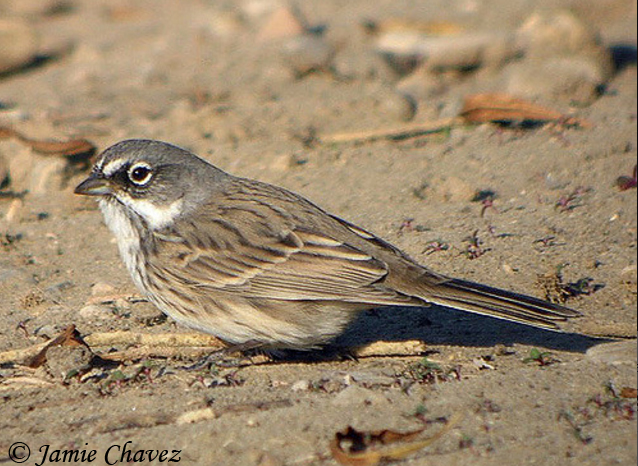
The Bell's Sparrow is a bird of arid, shrubby habitats of California and Baja California. Until 2014, Bell's Sparrow and the very similar Sagebrush Sparrow were considered one species, called the Sage Sparrow. However, there are plumage and other differences, and the Sagebrush Sparrow is generally grayer and paler than the Bell's Sparrow. Range differences also exist, with the Bell's Sparrow found primarily in California and Baja California, while the Sagebrush Sparrow is found across many western states.
Habitat:
Breeds in open brushy country, in brushy stands of coastal sagebrush and chapparal, as well as saltbush, chamise, and other low shrubs of the arid West. They winter in open flats, deserts, and dry chaparral of the Southwest.
Diet:
Bell's Sparrows are primarily consume a diet of seeds, insects, and small fruits. They depend heavily on insects (grasshoppers, beetles, spiders) during the breeding season and shift to eating weed and grass seeds during autumn and winter.
Behavior:
Primarily forages on the ground, sometimes low in brush and shrubs.
Breeding:
On their breeding grounds, the female builds a cup-shaped nest of twigs and grasses, lined with fine grasses and sometimes rootlets, feathers, hair, and lichen. The female lays 2-4 eggs, and incubates them for about 2 weeks. The young fledge from the nest about 10 days after hatching.
Song:
The Bell's sparrow has a bright, high-pitched, and cheerful song composed of a rapid series of musical trills and chirping chips. Often delivered from a prominent perch, their short, jumbled warble typically lasts two seconds or less and is accompanied by a distinctive, metallic "tink" contact call.
Migration:
Those in western California are permanent residents, but most birds move southward into the deserts of the southwestern U.S. and northwestern Mexico for the winter.
Interactive eBird Map:
Click here to access an interactive eBird map of Bell's Sparrow sightings
Similar Species:
Sagebrush Sparrow . Visually Sagebrush Sparrow and Bell's Sparrow are extremely difficult to distinguish from each other. Some Bell's Sparrows, particularly those that breed near the coast in California, are darker overall, but Bell's Sparrows further to the east are paler and are much more similar in appearance to Sagebrush Sparrows. Range differences are the most obvious means of distinguishing between the two species, but note there is overlap in wintering birds in western Arizona and nearby locations.
Bird Feeders:
Will occasionally come to feeders for baby chicken scratch feed.
Conservation Status:
They are still common in parts of their range, but with habitat loss due to agricultural and urban land uses, declines have occurred in much of their range. The IUCN considers them a species of "Least Concern".
Photo Information:
Taken by Jamie Chavez - October 28th, 2006 - Santa Maria, California - Photo licensed under Creative Commons Attribution Non-Commerical 2.0 Generic License .
