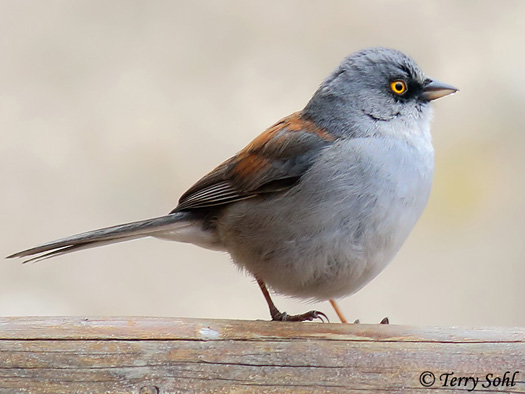
ID Keys: Bright yellow-orange eye, dark lores, bill dark above,
light yellow below, gray overall with rusty plumage on back
The
Yellow-eyed Junco is a relative of the much more widespread Dark-Eyed Junco.
The namesake yellow eye is the easiest way to differentiate the two species.
In the United States they are found in higher-elevation areas of southern
Arizona and New Mexico. They have a much more expansive range further
south into Mexico.
Habitat
In the U.S. portion of their range, they
are found in the "sky islands" of far southern Arizona and New Mexico,
generally at higher-elevation conifer or mixed forest lands. They can
also be found around human settlements near these habitats.
Diet
Feeds on both plant material and insects.
Seeds make up part of the diet at all times of the year, particularly during
the winter months. Insects and other small invertebrates may make up a
substantial part of the diet when available in the summer months.
Behavior
Most foraging is done on the ground.
They are usually described as being more deliberate and slower when
foraging, when compared to the Dark-eyed
Junco.
Nesting
The nest is a small cup built of grasses,
small roots, and other fine material, placed on the ground, or sometimes low
in a bush or tree. It is often placed in a protected location, such as in
the shelter of a rock or fallen log. The female lays 3 or 4 eggs.
Song
The Yellow-eyed Junco gives sharp “tick” and “tseet” contact calls along with dry chattering notes while foraging in flocks. Its song is a musical trill similar to that of other juncos but often richer and more varied, usually delivered from low perches in pine-oak woodlands.
Migration
Considered a permanent resident
throughout their range, but they may make local movements to lower
elevations in the winter.
Similar to Dark-eyed Junco. The Yellow-eyed Junco is easily distinguished from the Dark-eyed Junco by its bright yellow eyes, olive-gray upperparts, and contrasting reddish-brown back. Dark-eyed Juncos lack yellow eyes and typically show gray, black, brown, or slate-colored plumage patterns depending on the subspecies, without the warm rusty back of the Yellow-eyed Junco.
Feeders
Will come to feeders for seeds, nuts,
and breadcrumbs.